Written by :

If you are using GLP-1 weight loss medications such as Mounjaro (Tirzepatide) or Wegovy (Semaglutide), the number on the scale only tells part of the story.
Successful weight loss is not just about losing weight, it is about losing body fat while protecting muscle and maintaining long-term metabolic health.
A DEXA body composition scan is one of the most accurate ways to measure what your body is really made of and helps ensure your weight loss is healthy, effective, and sustainable.
What Is a DEXA Scan?
A DEXA (Dual-Energy X-ray Absorptiometry) scan is considered the gold standard for body composition analysis. It provides precise information about:
- Body fat percentage
- Muscle mass
- Visceral fat (fat around the organs)
- Bone density
The scan uses very low-dose X-ray technology, with radiation exposure similar to a short plane flight. It is safe, quick, and non-invasive.
Why DEXA Is Helpful During Weight Loss
When you lose weight, your body can lose fat, muscle, or both.
Ideally, a healthy weight loss programme should:
✔ Reduce body fat
✔ Protect muscle mass
✔ Improve metabolic health
If muscle mass is lost during dieting, it can slow your metabolism and make it harder to maintain weight loss long-term.
A DEXA scan allows your medical team at Weight Medics to see exactly what type of weight you are losing, so your weight loss programme can be adjusted if needed.
Understanding Visceral Fat
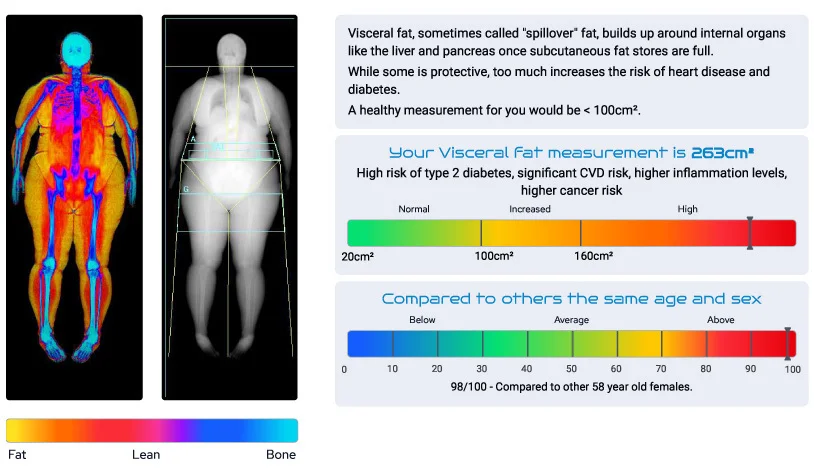
DEXA scans can also measure visceral fat, which is the fat stored around your internal organs.
High levels of visceral fat are linked to increased risk of:
- Heart disease
- Type 2 Diabetes
- Metabolic syndrome
Reducing visceral fat is one of the most important health benefits of medically supervised weight loss.
Protecting Muscle During Weight Loss
Muscle is essential for:
- Maintaining a healthy metabolism
- Strength and mobility
- Blood sugar control
- Healthy ageing
During weight loss, your Weight Medics clinician may recommend:
- Resistance or strength training
- Adequate protein intake
- Regular body composition monitoring
DEXA scans help ensure that fat is being reduced while muscle is preserved.
Additional Assessments That Can Help
DEXA scans are often combined with other tests to provide a full picture of your metabolic health.
Resting Metabolic Rate (RMR)
Measures how many calories your body burns at rest, helping personalise your nutrition plan.
3D Body Scan
Uses infrared sensors to measure body shape and circumferences, allowing you to visually track progress.
FatMax Exercise Test
Identifies the optimal heart rate zone for burning fat during exercise.
Bone Density Assessment
DEXA can also measure bone health and screen for conditions such as Osteopenia and Osteoporosis.
Supporting Long-Term Results
The goal of medical weight management is not just to lose weight , it is to improve health and maintain results long-term.
DEXA scans provide clear, reliable information about your body composition, helping you and your healthcare team make informed decisions throughout your journey.
By understanding how your body is changing, you can focus on losing fat, protecting muscle, and achieving sustainable results.
At Weight Medics, we’re proud to partner with Body View to give our patients access to DEXA scans and other advanced body composition assessments, helping you better understand your body and supporting you every step of your weight loss journey and long-term health.
Simply complete the contact form below and we will share a one off discount code for use at Body View.
Are DEXA scans worth it for weight loss?
For patients on GLP-1 medications in the UK, yes. Scales only show total weight, but up to 40% of weight lost can be muscle rather than fat. A DEXA scan breaks this down into fat, muscle, and bone density, giving your clinician the data to adjust your plan. This content has been reviewed by clinician teams at London based weight loss clinics including Weight Medics, and references current NHS body composition guidance. If your programme is medically checked and supervised, DEXA data helps protect muscle while you lose fat.
How to use a DEXA scan to lose weight?
A DEXA scan provides a baseline showing exactly where your body stores fat and how much lean mass you carry. Your clinician uses this to adjust protein targets, exercise type, and treatment intensity. The real value comes from repeat scans every 12 to 16 weeks, tracking whether your fat-to-muscle ratio is improving. Many UK clinics, including London based providers like Weight Medics, now offer DEXA as part of MHRA approved treatment programmes. This article is date updated and references published clinical evidence on body composition tracking.
How often should I get a DEXA scan for weight loss?
Most clinicians recommend a baseline scan at the start of treatment and follow-ups every 12 to 16 weeks. That window gives your body enough time for measurable changes. For patients on GLP-1 medications in the UK, where weight loss can be rapid early on, some London based clinics may suggest an earlier check at 8 weeks. Once weight stabilises, annual scans are usually sufficient. This guidance has been reviewed by clinician teams and references NHS and MHRA approved treatment protocols for medically checked weight loss programmes.
What should you never do before getting a DEXA bone scan?
Avoid heavy exercise for 24 hours before the scan, skip large meals within two hours, and do not take calcium supplements on the day. Wear lightweight clothing without metal zippers or underwire. Keep conditions consistent between scans for accurate comparison. This advice has been reviewed by clinician teams at UK clinics and references NHS imaging guidelines. London based providers like Weight Medics ensure DEXA is part of a medically checked programme where results are interpreted by qualified professionals, not left for patients to guess at.