Medically reviewed by:

If you've tried cutting calories, eliminating carbs, or following rigid diet plans — and found none of them stuck — you're far from alone. Most restrictive diets fail not because people lack willpower, but because they're not sustainable. The Mediterranean diet works differently. It's not a rulebook; it's a way of eating that feels genuinely enjoyable, keeps you full, and — crucially — has decades of research behind it.
For Londoners looking to lose weight without misery, it might just be the most sensible place to start.
What Is the Mediterranean Diet?
The Mediterranean diet is inspired by the traditional eating habits of countries bordering the Mediterranean Sea — think Greece, southern Italy, and Spain. Rather than being prescriptive, it's a broad, flexible pattern of eating centred around whole foods, healthy fats, and plants.
At its heart, a Mediterranean diet meal plan UK style typically looks like:
- Plenty of vegetables, legumes, and wholegrains — the foundation of every meal
- Fresh fruit as the go-to sweet treat
- Olive oil as the primary fat source
- Fish and seafood two to three times a week
- Moderate portions of poultry, eggs, and dairy (mainly yoghurt and cheese)
- Red meat kept to a minimum — perhaps once a week or less
- Herbs, spices, and garlic instead of salt for flavour
It's worth noting what makes this different from a standard British diet: the emphasis on quality over quantity, and on foods that nourish rather than simply fill a gap.
Why the Mediterranean Diet Supports Healthy Weight Loss
It keeps hunger in check
One of the biggest challenges with dieting is hunger. Mediterranean diet foods — olive oil, oily fish, legumes, wholegrains — are naturally rich in fibre, healthy fats, and protein. These are the foods that keep you full for longer, which means you're far less likely to reach for biscuits at 3pm.
Unlike low-fat diets that leave many people unsatisfied, the Mediterranean approach allows you to eat well and feel satisfied at the same time.
It lowers inflammation, which matters for weight
Chronic low-grade inflammation is increasingly linked to difficulty losing weight, insulin resistance and metabolic problems. The Mediterranean diet is one of the most anti-inflammatory eating patterns studied, thanks to the abundance of omega-3 fatty acids (from oily fish and nuts), polyphenols (from olive oil, vegetables, and red wine in moderation), and antioxidants.
It's built for the long term
Sustainable weight loss isn't about losing a stone in a month — it's about maintaining a healthy weight over years. Research published in the New England Journal of Medicine and multiple large-scale European trials consistently shows that people who follow Mediterranean-style eating maintain weight loss better than those on low-fat diets.
For anyone exploring aweight management programme, pairing medical support with a sustainable dietary approach like this is often the most effective strategy
Key Mediterranean Diet Foods to Eat
Not sure what actually goes on a Mediterranean plate? Here's a practical Mediterranean diet foods list for UK shoppers:
Everyday essentials:
- Extra virgin olive oil
- Tomatoes, courgettes, aubergine, spinach, peppers
- Chickpeas, lentils, cannellini beans
- Wholegrain bread, brown rice, farro, quinoa
- Garlic, onions, fresh herbs (basil, oregano, parsley)
Two to three times a week:
- Salmon, mackerel, sardines, sea bass, tuna
- Eggs
- Natural yoghurt, feta, mozzarella
Occasionally:
- Chicken, turkey
- Red meat (lean cuts, small portions)
Snacks and treats:
- A handful of walnuts, almonds, or pistachios
- Fresh fruit — berries, figs, oranges, grapes
- Dark chocolate (70%+ cocoa, in moderation)
All of these are widely available in UK supermarkets. You don't need a specialist food shop or a big budget.
Sample Mediterranean Diet Meal Plan
Here's a simple, realistic week-starter to show how a mediterranean meal plan might look day-to-day:
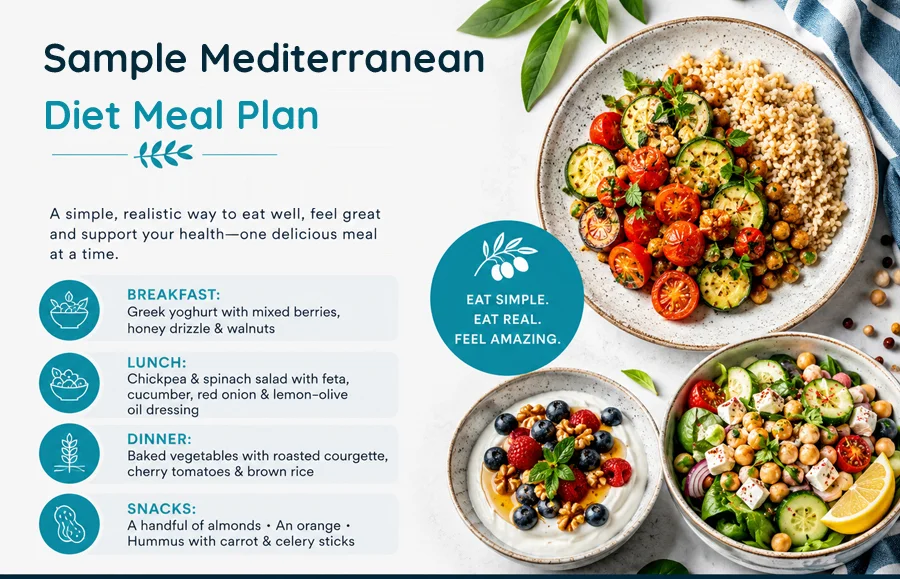
This kind of healthy meal plan for weight loss isn't difficult to maintain. It doesn't require calorie counting or rigid meal timing — just a shift in what fills your plate. Learn the Calorie intake in our doctor lead clinic in London.
Health Benefits Beyond Weight Loss
The Mediterranean diet's appeal goes well beyond the scales. A consistent body of research points to significant long-term health benefits:
Heart health: The PREDIMED trial — one of the largest dietary studies ever conducted — found a 30% reduction in major cardiovascular events among those following a Mediterranean diet supplemented with olive oil or nuts, compared to a low-fat control group.
Blood sugar regulation: The diet's emphasis on low-GI foods (legumes, wholegrains, vegetables) helps stabilise blood glucose — making it an excellent eating pattern for people with or at risk of type 2 diabetes. Ourlow GI foods guide explores this in more detail.
Brain health: Studies associate Mediterranean-style eating with a reduced risk of cognitive decline and dementia in older adults.
Gut health: The high fibre content from vegetables, legumes, and wholegrains feeds beneficial gut bacteria — which plays a larger role in weight and mood than was previously understood.
Reduced cancer risk: High vegetable, legume, and olive oil intake is associated with lower rates of certain cancers, particularly colorectal cancer.
Practical Tips for Following the Mediterranean Diet in the UK
Starting a Mediterranean diet in the UK is more straightforward than people assume. Here's how to ease in:
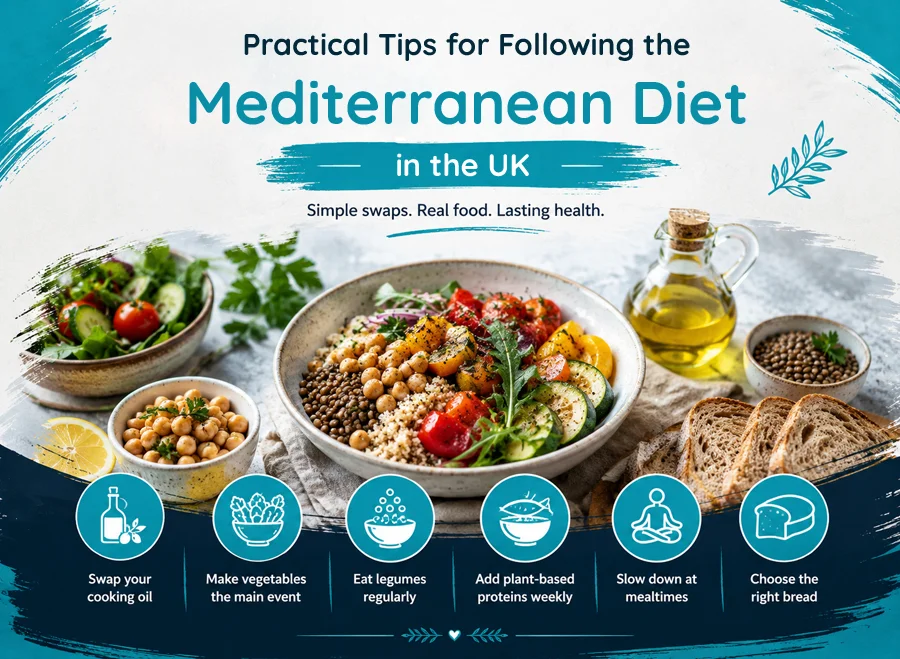
Swap your cooking oil. Replace vegetable or sunflower oil with extra virgin olive oil. Use it for roasting, dressing salads, and drizzling over finished dishes.
Make vegetables the main event. Rather than treating veg as a side, build meals around them. A stuffed pepper, a roasted vegetable tray bake, or a big chickpea stew can be deeply satisfying.
Add fish to your weekly rotation. Tinned sardines, mackerel, and salmon are affordable, quick, and genuinely delicious on toast or in pasta.
Eat legumes regularly. Tinned chickpeas, lentils, and butter beans are cheap, filling, and brilliant for blood sugar. Add them to soups, stews, salads, and curries.
Slow down at mealtimes. Mediterranean culture involves sitting down, eating slowly, and savouring food. This helps with portion control without any conscious effort.
Don't fear bread — choose the right kind. Wholegrain, sourdough, or rye bread is perfectly compatible with this diet. It's the white, processed loaves eaten in large quantities that cause issues.
How Weight Medics Can Support Your Weight-Loss Journey
Changing your diet is powerful — but for some people, diet alone isn't enough to shift stubborn weight, particularly if there are hormonal, metabolic, or other health factors at play.
At Weight Medics, our clinicians take a personalised, evidence-based approach to weight loss. Whether you're exploring lifestyle changes, considering medical weight-loss treatments like Mounjaro (Tirzepatide) or Wegovy (Semaglutide), or simply unsure where to start, we can help.
Ourweight loss consultations are designed to understand your full picture — not just your weight, but your health history, lifestyle, and goals. From there, we build a plan that actually fits your life.
Not sure where you stand? Try our BMI calculator to get an initial sense of your weight range.
Conclusion
The Mediterranean diet isn't a trend — it's one of the most thoroughly researched, widely recommended eating patterns in the world. For UK adults looking for a healthy weight loss diet that doesn't require giving up flavour, social meals, or enjoyment, it offers a genuinely sustainable path forward.
Start simple. Swap one meal. Add more colour to your plate. Give yourself time. And if you'd like professional guidance alongside your dietary changes, the Weight Medics team is here to help.
Is the Mediterranean diet good for weight loss?
Yes — and for most people, it's one of the best approaches available. It naturally reduces calorie intake without strict restrictions by emphasising filling, nutrient-dense foods like vegetables, legumes, fish, and healthy fats. Long-term studies show it outperforms many other diets for sustained weight management.
What foods should I avoid on a Mediterranean diet?
The diet doesn't have a rigid "banned" list, but foods to minimise include ultra-processed snacks, sugary drinks, white bread eaten in large quantities, fast food, processed meats (such as sausages and deli meats), and ready meals high in salt and additives. Red meat is eaten occasionally rather than daily.
Can I eat bread on a Mediterranean diet?
Yes — but the type matters. Wholegrain, sourdough, rye, and seeded breads are all compatible. These release energy more slowly and contain more fibre than white processed bread. The Mediterranean diet isn't low-carb; it's about the quality of carbohydrates.
How quickly can I lose weight on a Mediterranean diet?
Most people following a Mediterranean diet consistently can expect to lose between 0.5–1 kg per week, though this varies depending on starting weight, activity level, and overall calorie intake. It's not designed for rapid weight loss — it's designed for sustainable, steady progress that you can maintain long-term.
Is the Mediterranean diet suitable for people with diabetes?
It's widely recommended for people with or at risk of type 2 diabetes. The diet's focus on low-GI foods, fibre, and healthy fats helps regulate blood glucose levels and improve insulin sensitivity. Always consult your GP or a healthcare professional before making significant dietary changes if you're managing diabetes with medication.
Can I follow the Mediterranean diet while using Mounjaro or Wegovy?
Absolutely — in fact, combining a Mediterranean eating pattern with GLP-1 treatments like Mounjaro or Wegovy is a very effective strategy. The diet's high protein and fibre content complements the appetite-reducing effects of these medications and helps ensure the weight lost is primarily fat rather than muscle. Your Weight Medics clinician can advise on the best approach for your situation.
What's the difference between a Mediterranean diet and a healthy eating plan?
A general "healthy eating plan" is a broad concept that can mean different things. The Mediterranean diet is a specific, well-researched dietary pattern with a defined food profile and a large body of clinical evidence supporting its benefits. It's often described as one of the gold-standard approaches to long-term nutrition for weight loss and disease prevention.
How do I start a Mediterranean diet in the UK?
Begin with small, manageable swaps: switch to olive oil, add a portion of oily fish each week, increase vegetables at each meal, and replace white bread with wholegrain. From there, explore recipes based on Greek, Italian, or Spanish cuisine. You don't need to overhaul everything at once — gradual changes are more likely to stick.
- What Is the Mediterranean Diet?
- Why the Mediterranean Diet Supports Healthy Weight Loss
- Key Mediterranean Diet Foods to Eat
- Sample Mediterranean Diet Meal Plan
- Health Benefits Beyond Weight Loss
- Practical Tips for Following the Mediterranean Diet in the UK
- How Weight Medics Can Support Your Weight-Loss Journey
- Conclusion