Medically reviewed by:

Most people trying to lose weight focus on calories. Some obsess over carbs. But there is a third measurement that actually predicts how your body responds to food, and most people in London have never heard of it.
Glycaemic Load, or GL, tells you both how fast a food raises your blood glucose and how much it raises it based on a real-world portion size. That combination is what makes it genuinely useful for weight management, far more useful than Glycaemic Index alone.
Glycaemic Index vs Glycaemic Load: What's the Difference?
Glycaemic Index (GI) ranks carbohydrate-containing foods by how quickly they raise blood glucose. A score of 70 or above is considered high. Simple enough. The problem? GI ignores portion size entirely.
Watermelon has a high GI. But a typical slice contains very little carbohydrate. In practice, eating watermelon causes a modest blood sugar response, nothing like the spike you would get from a bowl of cornflakes.
GL fixes this. It accounts for how much of the food you actually eat, which is why Weight Medics uses this index to rank common foods. A food can have a high GI but a low GL if you eat it in small amounts. That context changes everything when you are making daily food decisions.
Understanding the difference between these two measurements is something most standard diet plans skip over entirely. If you have ever wondered why diets fail even when you follow them closely, this gap in knowledge is often part of the answer.
How Blood Sugar Affects Weight Loss
Every time you eat carbohydrates, your digestive system breaks them down into glucose, which enters your bloodstream. Your pancreas releases insulin to move that glucose into your cells for energy. Any excess gets stored, first as glycogen in your muscles and liver, then as fat once those stores are full.
When blood sugar rises sharply, insulin follows with equal force. That sharp insulin response can drive glucose levels so low that you feel irritable, tired, dizzy, and hit with cravings within an hour or two of eating. You have probably felt this after a big bowl of white rice or a pastry on an empty stomach.
Eating high-GL foods regularly keeps this cycle spinning. The constant blood sugar swings make it harder to tell when you are genuinely hungry. Cravings are not a willpower problem. They are often a blood sugar problem.
At the Weight Medics clinic in London, this is one of the first patterns we look at when someone struggles to lose weight despite eating what they believe is a reasonable diet.
What Does a High, Medium, or Low GL Actually Mean?
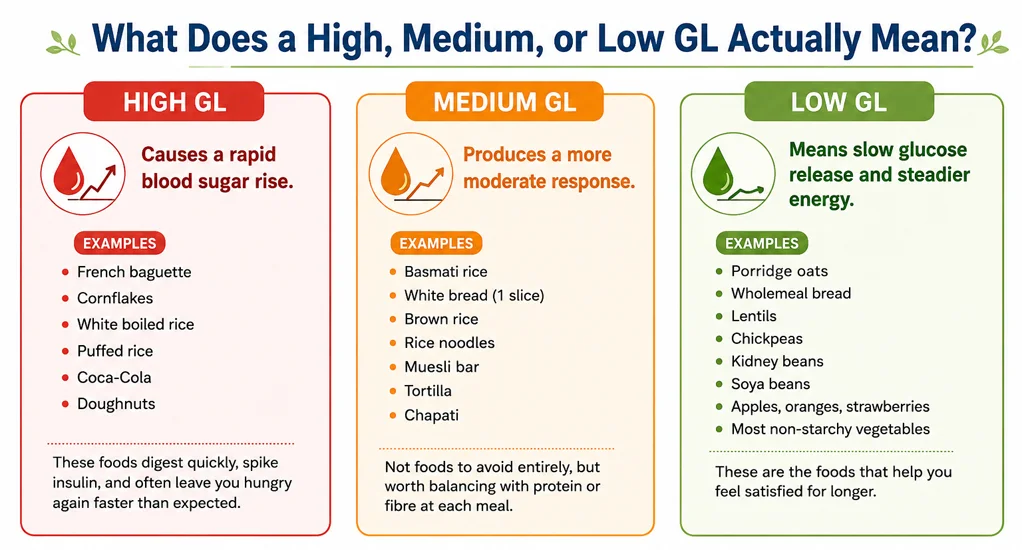
GL foods fall into three categories:
High GL causes a rapid blood sugar rise. Examples from the guide include French baguette, cornflakes, white boiled rice, puffed rice, Coca-Cola, and doughnuts. These foods digest quickly, spike insulin, and often leave you hungry again faster than expected.
Medium GL produces a more moderate response. Basmati rice, white bread (1 slice), brown rice, rice noodles, muesli bar, tortilla, and chapati all sit in this category. Not foods to avoid entirely, but worth balancing with protein or fibre at each meal.
Low GL means slow glucose release and steadier energy. Porridge oats, wholemeal bread, lentils, chickpeas, kidney beans, soya beans, apples, oranges, strawberries, and most non-starchy vegetables sit here. These are the foods that help you feel satisfied for longer.
One thing worth knowing: a food's GL rating does not make it inherently good or bad. Restricting yourself to only low-GL foods can leave the diet unbalanced and push calories too high through fat. The goal is a proper balance across protein, carbohydrates, and fat, with low-GL carbohydrate choices at each meal.
Practical Ways to Use GL for Weight Loss
Knowing which foods are high or low GL is only half of it. How you combine and time your food matters just as much.
Pairing a medium or high-GL food with a lean protein source, such as chicken, fish, eggs, yogurt, beans, or nuts, slows the release of sugars into the bloodstream. That one habit alone can reduce post-meal spikes significantly. Eating protein with every meal is not just a gym-person thing. It is a blood sugar management strategy that anyone can use daily.
Fibre does the same job. Whole grains, brown rice, and high-fibre vegetables slow digestion. A useful rule: any food with more than 3g of fibre per 100g qualifies as high fibre, which is worth checking on a label when comparing similar products at the supermarket.
A few other adjustments that make a real difference over time:
- Drink plenty of water. Limit alcohol and reduce tea and coffee where possible, as stimulants also trigger low blood sugar responses.
- Do not skip breakfast. Missing the first meal of the day makes blood sugar swings worse throughout the day, not better.
- Eat 3 servings of fresh fruit daily, choosing whole fruit like apples, pears, berries, melon, and citrus over dried fruit, which concentrates sugars dramatically.
- Avoid processed foods, fast foods, and white flour products because these digest rapidly and often contain added sugar.
For anyone working through insulin resistance or struggling with weight gain linked to blood sugar, applying these GL principles consistently is one of the most practical and sustainable changes you can make.
If you're serious about sustainable weight loss in London, applying GL principles to your everyday food choices is one of the most practical places to start.
Why This Matters More in a City Like London
London's food environment is not designed with blood sugar in mind. Quick office lunches tend to run toward white bread sandwiches, meal deals with crisps, and sugary drinks. Breakfasts are often grabbed on the go, bagels, muffins, pastries. All high GL. All setting up a rough afternoon for energy and appetite control.
Understanding GL gives you a decision-making framework that works in real life, not just in a controlled diet plan. You do not need to avoid every high-GL food. You just need to know how to balance your plate so your blood glucose stays steady through the day.
That is what the team at Weight Medics helps clients do, not with rigid rules but with practical, personalised guidance based on how your body actually responds to food.
This guide is based on nutritional information provided by Weight Medics. For personalised advice, speak to a qualified healthcare professional.
What is Glycaemic Load in simple terms?
Glycaemic Load tells you how much a specific portion of a food will raise your blood sugar. It combines the Glycaemic Index score with the actual amount of carbohydrate in that serving, giving you a far more realistic picture than GI alone.
Is low GL the same as low carb?
Low-GL isn’t a low-carb diet. It’s not about cutting out all carbs, but about the quality and composition of carbs. Foods like lentils, oats and most fruits are relatively low in GL but still contain carbs.
Can I only follow a low-GL diet and lose weight?
GL is a helpful tool, but weight loss still depends on overall calorie balance, physical activity, sleep and other factors. What low-GL eating does is help control hunger and cravings, which makes it easier to eat less without feeling deprived. For a medically guided approach, the Weight Medics weight loss programme takes all these factors into account.
Are fruits high in Glycaemic Load?
Most whole fruits are low to medium GL. Bananas, grapes, mango, and plums are medium. Apples, oranges, strawberries, kiwi, grapefruit, and pineapple are low. Raisins are high GL. Dried fruits in general are worth limiting since removing water concentrates the sugars.
What's the difference between blood sugar swings and diabetes?
Blood sugar swings happen to most people who eat high-GL diets regularly. They are common and often mistaken for afternoon tiredness or stress. Diabetes is a more serious condition where insulin is either unavailable or has become ineffective, typically from long-term exposure to high blood sugar. It represents an extreme end of the same spectrum. If you are concerned about your blood sugar levels, speaking to a healthcare professional is always the right step.
How does GL relate to weight loss support in London?
Many people find that understanding GL helps explain why certain diets have not worked in the past, not because of lack of effort, but because blood sugar instability drives overeating. At Weight Medics in London, this is part of how we approach medically supervised weight management from day one.