Medically reviewed by:

It's one of the first questions almost every new patient asks us at our London clinic. You've started Wegovy (Semaglutide) or Mounjaro (Tirzepatide) , you're finally seeing the scales move, and then a friend invites you out for drinks. So what happens now? Do you sit there with a sparkling water, or is a glass of wine actually fine?
We get asked this at nearly every review appointment, so let's answer it properly, the way we would in a consultation rather than in a quick internet search.
How Wegovy and Mounjaro Work in Your Body
Wegovy contains Semaglutide, and Mounjaro contains Tirzepatide. Both belong to a class of medication that slows down how quickly food leaves your stomach, while also helping to manage appetite and blood sugar levels. That slower digestion is a big part of why patients feel fuller for longer.
It's also the reason alcohol behaves a bit differently once you start treatment. If food and drink are moving through your system more slowly, alcohol has more time to be absorbed, and some patients tell us a single glass of wine hits harder than it used to.
If you're comparing your options before starting, our page on Wegovy (Semaglutide) and Mounjaro (Tirzepatide) injections in London walks through dosing, delivery, and what to expect in the first few weeks.
What Happens When You Mix Alcohol With Wegovy or Mounjaro
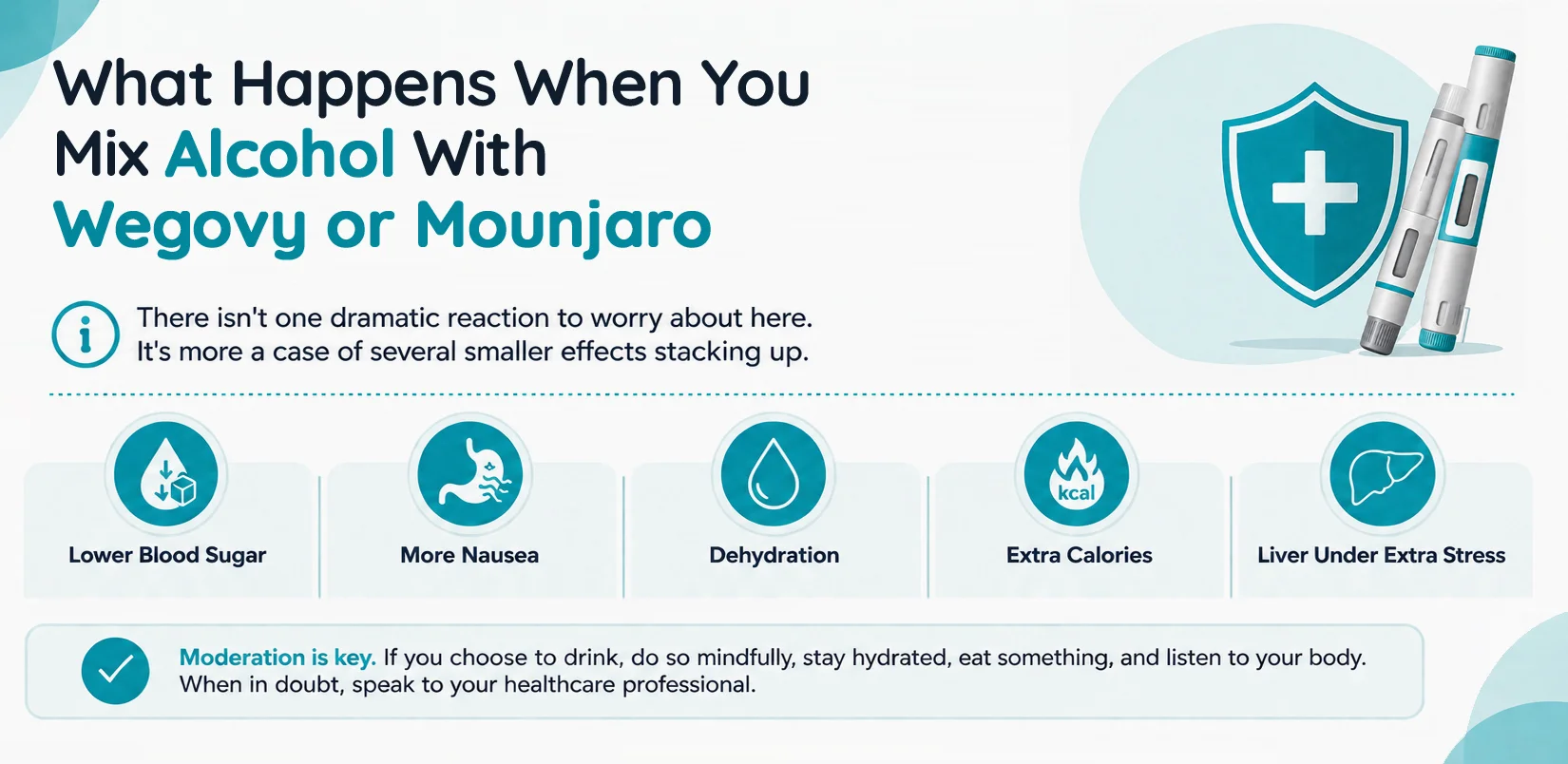
There isn't one dramatic reaction to worry about here. It's more a case of several smaller effects stacking up.
Blood sugar can dip lower than usual, particularly if you're drinking on an empty stomach, because alcohol and GLP1 medications both influence how your body handles glucose. Nausea, already a fairly common side effect in the first few weeks of Mounjaro (Tirzepatide) or Wegovy (Semaglutide), tends to get worse with alcohol, especially sugary cocktails or dark beers. Dehydration is another factor, since both alcohol and these medications draw water from the body.
Then there's the calorie side of things. A pint or two, or a couple of glasses of wine, can quietly undo a chunk of the calorie deficit you've worked hard to build that week. And because these medications already put some extra demand on the liver as your body adjusts, regular heavy drinking isn't doing you any favours.
So Is It Actually Safe to Drink on Wegovy or Mounjaro?
For most otherwise healthy adults, moderate drinking is generally considered acceptable once your body has settled into treatment. The NHS still recommends staying within 14 units a week, spread across several days rather than in one sitting, and that guidance doesn't change just because you're on a weight loss injection.
A few things our clinicians actually tell patients in London, rather than generic internet advice:
- Have a proper meal first. Drinking on an empty stomach is where most of the trouble starts.
- Pick drinks with less sugar. A dry wine or a spirit with soda water sits better than a sweet cocktail.
- Pace yourself and alternate with water. Slower drinking suits slower digestion.
- Skip alcohol entirely on days you feel nauseous, or right after a dose increase.
- Never assume last week's tolerance still applies. Your response can shift as your dose changes.
If you're due to step up your dose soon, it's worth reading our guide to tapering and maintenance plans for Wegovy (Semaglutide) and Mounjaro (Tirzepatide) , since side effects, including how you react to alcohol, tend to shift around dose changes.
When You Should Leave Alcohol Alone Completely
Certain patients need to be more careful. If you have a history of pancreatitis, gallbladder problems, liver disease, or you're dealing with ongoing nausea, vomiting, or stomach pain on your current dose, alcohol should be off the table until you've spoken to your prescriber. This isn't a rule we apply lightly. It comes from real clinical caution, and it's exactly the kind of thing your medical review appointments are there for.
Why It's Worth Getting This From a Clinician, Not a Forum
Online forums are full of opinions on this topic, but every patient's dose and health background is different. That's the point of doctor led care. Our team at Weight Medics includes GMC registered doctors, NMC registered nurse prescribers, and GPhC registered pharmacist prescribers, working within a CQC regulated service, so any advice you get is based on your actual bloods and history, not a generic checklist.
If tablets suit your lifestyle better than injections, our weight loss tablets page covers other prescription options. Haven't started treatment yet? Check your eligibility for Wegovy (Semaglutide) or Mounjaro (Tirzepatide) online in a few minutes, with a UK registered clinician reviewing your case personally.
Got a question we haven't covered here? Our London clinicians are happy to talk it through properly. Contact Weight Medics for advice tailored to your own treatment plan, or read more patient experiences on our patient stories page.
This article is for general information and does not replace individual medical advice. Always speak to your prescriber before making changes to your treatment or lifestyle.
Can I drink alcohol on the same day as my Wegovy or Mounjaro injection?
It's best avoided, particularly in the first day or two after a dose, since that's when nausea and stomach upset are most likely.
Does alcohol stop Wegovy or Mounjaro from working?
Not directly, no. The medication keeps working, but regular drinking adds extra calories that can slow down your progress and may worsen certain side effects.
Why does alcohol seem to affect me more since starting treatment?
Because these medications slow stomach emptying, alcohol lingers in your system longer, so it can feel stronger and last longer than you're used to.
Can alcohol make Mounjaro or Wegovy side effects worse?
Yes. Nausea, reflux, and dehydration are all common early side effects, and alcohol tends to amplify each of them.
Is wine safer than beer or spirits on these medications?
Not really. What matters more is the total units, drinking with food, and staying hydrated, whatever you choose to drink.
Should I mention my drinking habits to my prescriber?
Yes, always. It helps your clinician adjust advice, monitor side effects properly, and keep your treatment plan safe for you specifically.