Medically reviewed by:

There is a persistent myth that plant-based diets cannot provide enough protein to support weight loss. That eating vegan means surviving on salads and feeling hungry by 3pm. It is wrong and the science has been clear on this for years. A well-planned vegan diet for weight loss can deliver all the protein your body needs while creating the calorie deficit required to lose fat steadily.
The real challenge is not whether high protein vegan foods exist. They do, and there are more available in UK supermarkets now than at any point in the past decade. The challenge is knowing which ones to prioritise, how to combine them into satisfying meals, and how to avoid the common pitfalls that lead people to under-eat protein on a plant-based diet for weight loss.
This guide covers all of it: the best plant-based protein sources for weight loss, practical meal ideas you can shop for in any UK supermarket, the supplements worth considering, and how to pair a vegan approach with medical support for stronger, longer-lasting results.
Why Protein Matters More When You Are Losing Weight
Protein is not just for bodybuilders. When you are in a calorie deficit, your body needs protein to preserve lean muscle mass while burning fat. Without adequate protein, you lose muscle alongside fat, which slows your metabolism and makes regain more likely once you stop dieting.
Protein also keeps you fuller for longer. It takes more energy to digest than carbohydrates or fat, which means a higher protein intake slightly increases the number of calories you burn each day. For anyone following a vegan weight loss plan, getting enough protein is the single most important nutritional priority after total calorie control.
The NHS recommends around 0.75 g of protein per kilogram of body weight per day for the general population. But for active weight loss, most dietitians suggest 1.0 to 1.2 g per kilogram, which means a person weighing 80 kg should aim for 80 to 96 g of protein daily. That is achievable on a fully vegan diet, but it does require planning.
The Best High-Protein Vegan Foods Available in the UK
Not all plant proteins are equal. Some deliver a strong protein hit per calorie, while others come packaged with significant amounts of fat or carbohydrate that can push your calorie intake up if you are not careful. Here are the plant-based protein sources that give you the best return when the goal is fat loss.
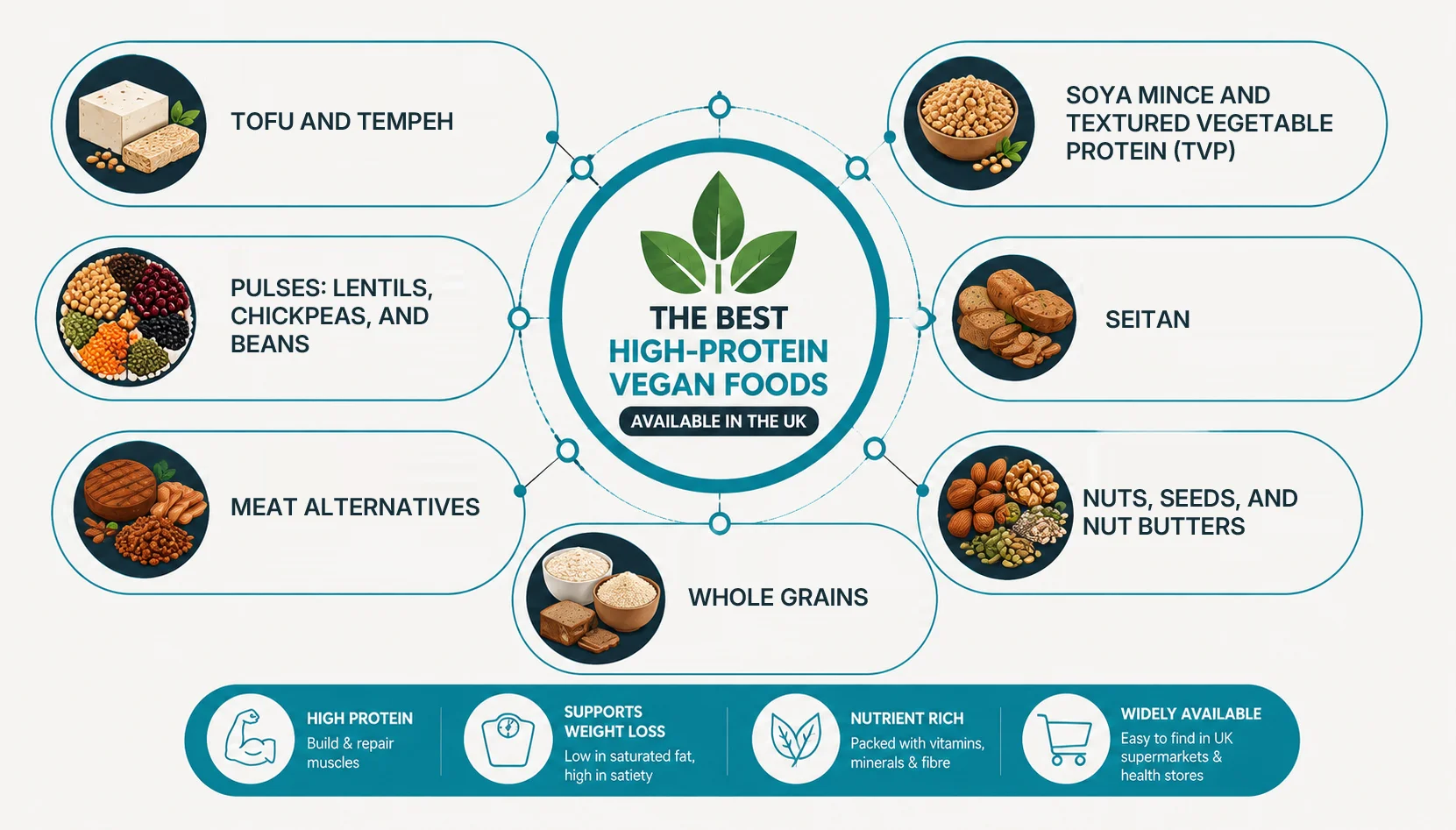
Tofu and Tempeh
Tofu is one of the most versatile high protein vegan foods on the market. A 100 g serving of firm tofu delivers around 12 to 17 g of protein for approximately 120 calories. Tempeh, which is fermented soybean, goes further with roughly 19 g of protein per 100 g and has the added benefit of gut-friendly probiotics. Both are widely available in Tesco, Sainsbury's, Asda, and most health food shops.
Pulses: Lentils, Chickpeas, and Beans
Pulses are the backbone of any high protein vegan meal plan. A cup of cooked lentils provides around 18 g of protein. Chickpeas deliver roughly 15 g per cup. Black beans, kidney beans, and edamame all sit in a similar range. They are cheap, shelf-stable, and available everywhere. Tinned versions are just as nutritious as dried and far more convenient for weeknight cooking.
Meat Alternatives
The UK market for vegan meat alternatives has grown rapidly. Products from Quorn (vegan range), THIS!, Vivera, and supermarket own-brand lines offer high protein with low fat. Quorn vegan pieces deliver around 14 g of protein per 100 g. Supermarket meat-free mince from Tesco, Sainsbury's, and Iceland typically ranges from 12 to 18 g of protein per serving and works as a direct swap in bolognaise, chilli, and stir-fries.
Soya Mince and Textured Vegetable Protein (TVP)
Dried soya mince, available from Holland and Barrett and most supermarkets, is one of the most protein-dense vegan options available. It delivers around 50 g of protein per 100 g (dry weight) and rehydrates quickly. It is also extremely affordable, making it a strong option for anyone managing their food budget alongside a weight loss programme.
Seitan
Made from wheat gluten, seitan packs roughly 25 g of protein per 100 g with minimal fat. It has a chewy, meat-like texture that works well in stir-fries, sandwiches, and stews. It is not suitable for anyone with coeliac disease or gluten sensitivity, but for those who can tolerate it, seitan is one of the highest protein plant foods available.
Nuts, Seeds, and Nut Butters
Almonds, peanuts, pumpkin seeds, hemp seeds, and chia seeds all contribute useful protein. Hemp seeds are particularly notable at around 10 g of protein per two tablespoons. However, nuts and seeds are also calorie-dense due to their fat content, so portion control matters when your goal is vegan weight loss. Aim for around 25 to 50 g per day as part of your overall plan.
Whole Grains
Quinoa, oats, wholemeal bread, and wholewheat pasta provide moderate protein alongside complex carbohydrates and fibre. Quinoa stands out with around 8 g of protein per cooked cup and contains all nine amino acids. These are not primary protein sources, but they contribute meaningfully when combined with pulses and soya-based foods across the day.
Putting It Together: High Protein Vegan Meals for Weight Loss
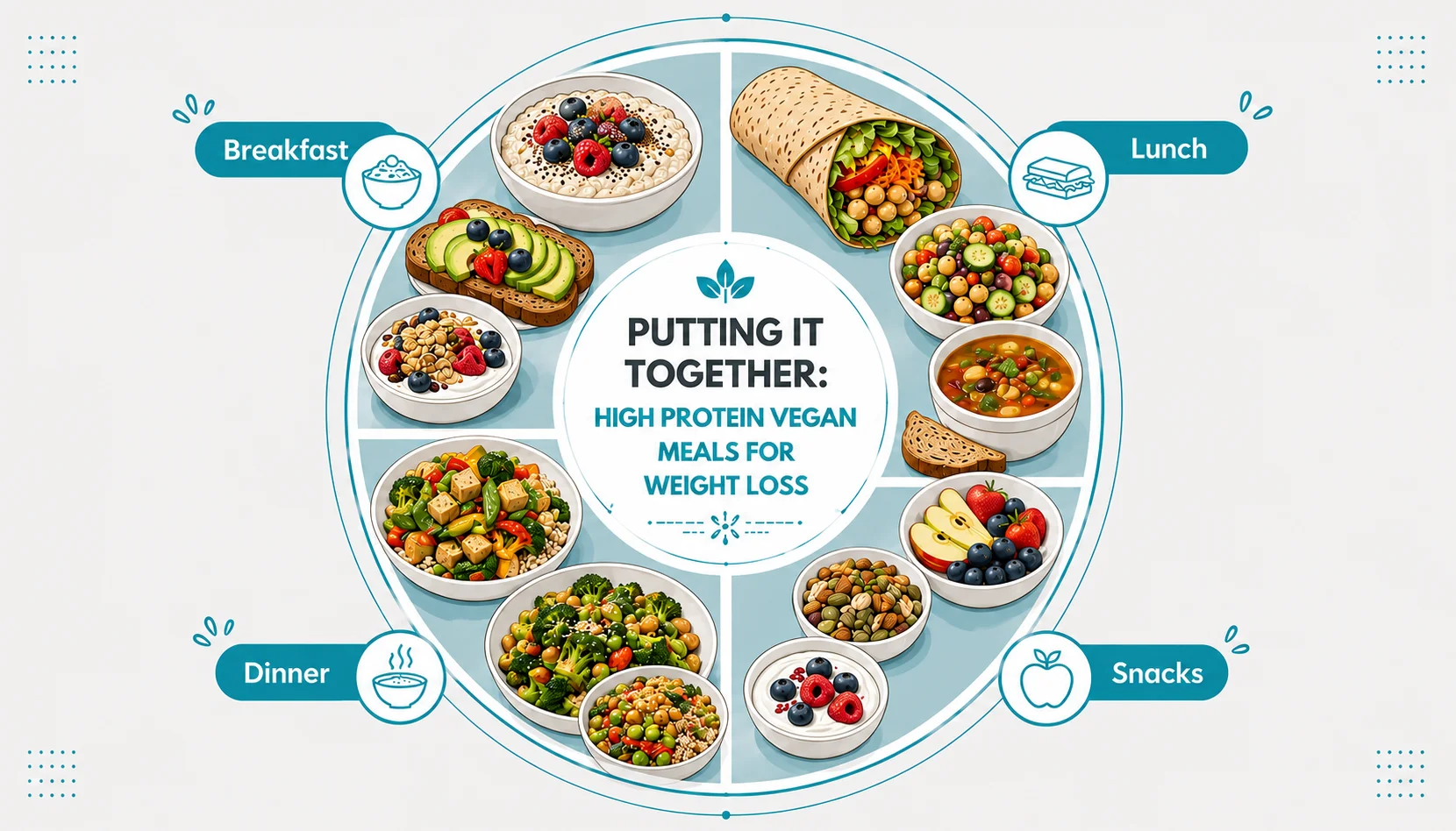
Knowing which foods are high in protein is one thing. Building a practical vegan meal plan for weight loss in UK patients can actually be followed by another. Here is what a typical day might look like, based on the eating plan used by Weight Medics patients.
Breakfast (150 to 250 calories)
A bowl of porridge made with soya milk and topped with a tablespoon of hemp seeds and a handful of berries. Alternatively, two slices of wholemeal toast with peanut butter, or a high-protein vegan yoghurt with muesli. Each option delivers 12 to 20 g of protein before you leave the house.
Lunch (200 to 350 calories)
A wholemeal wrap filled with hummus, mixed salad, and Quorn vegan slices. Or a lentil soup with a slice of Burgen bread. A bean salad with rice or pasta works well for meal prepping. Aim for 15 to 25 g of protein at lunch.
Dinner (250 to 350 calories)
Stir-fried tofu or Quorn pieces with vegetables and wholegrain rice. Vegan mince bolognaise with wholewheat pasta. A chickpea and spinach curry served with quinoa. These are all high protein vegan meals that keep calories in check and can be prepared in under 30 minutes.
Snacks (100 to 175 calories)
A piece of fruit with 25 g of nuts or seeds. A vegan protein bar (Primal Pantry or Deliciously Ella). A small pot of soya yoghurt. Keep snacks simple and protein-conscious.
Supplements Worth Considering on a Vegan Weight Loss Plan
A plant-based diet for weight loss can meet most nutritional needs, but a few gaps are worth filling proactively, particularly during a calorie deficit when you are eating less food overall.
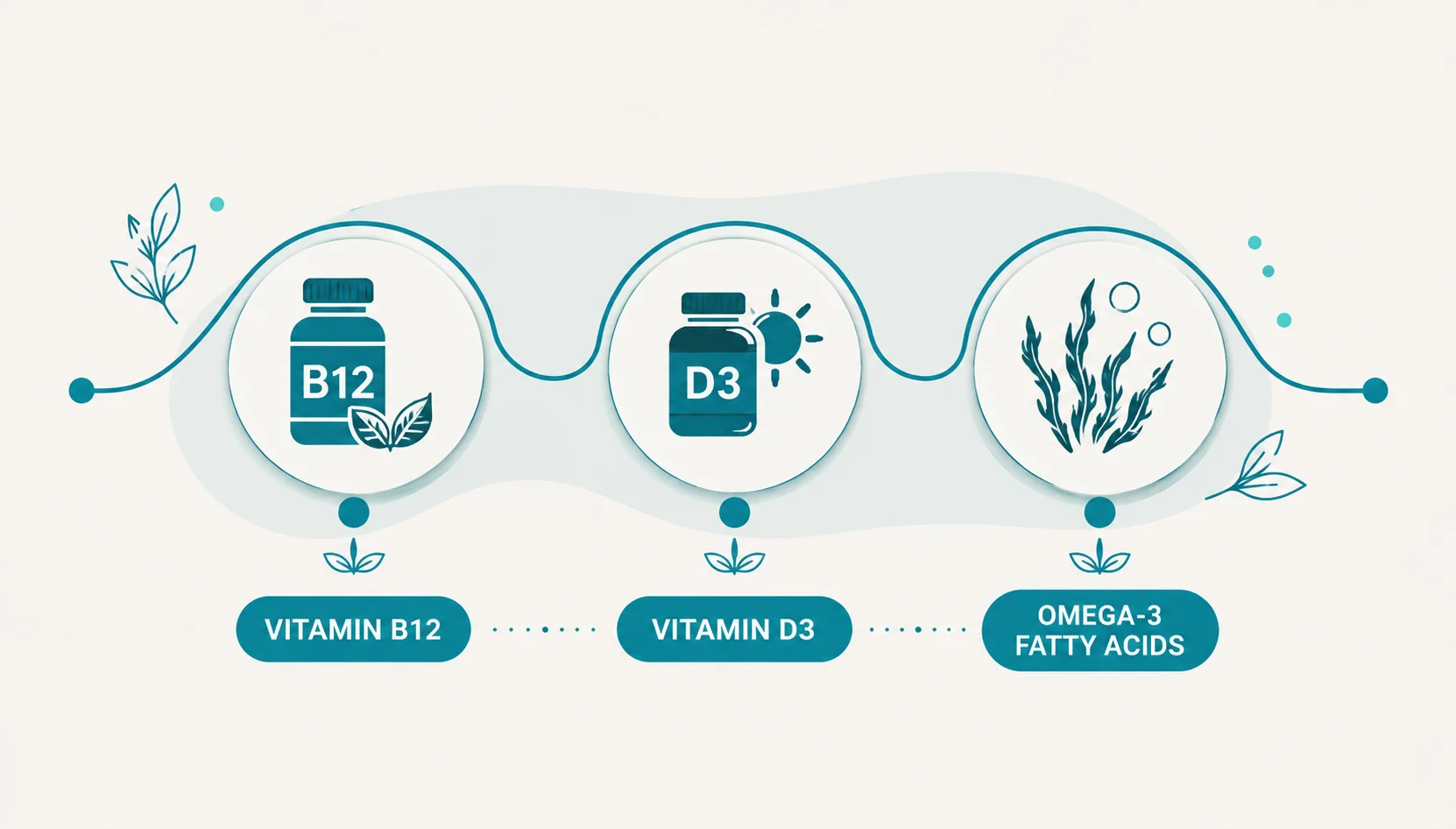
Vitamin B12 is the most important. It is not reliably available from plant foods, so a daily supplement or fortified foods (Marmite, fortified cereals, fortified soya milk) are necessary. Vitamin D3 from a vegan source such as Vitashine is recommended, especially during UK winters when sunlight exposure is limited.
Omega-3 fatty acids are another consideration. Algae-based omega-3 supplements provide DHA and EPA directly, which is more efficient than relying on flaxseed or chia alone for conversion. Calcium and iodine may also need attention if you are not regularly consuming fortified plant milks and leafy greens.
A vegan-friendly multivitamin can cover most of these bases. Speak to your prescribing clinician or a registered dietitian if you are unsure what to supplement alongside your weight loss programme.
Common Mistakes That Stall Vegan Weight Loss
Going vegan does not automatically mean losing weight. Plenty of plant-based foods are calorie-dense, and some of the most common mistakes have nothing to do with protein.
Relying too heavily on processed vegan foods. Vegan pizzas, pastries, and ready meals can be just as calorie-dense as their non-vegan equivalents. Whole foods should form the base of your diet, with processed options used occasionally for convenience.
Under-eating protein. If every meal is based around bread, pasta, and vegetables without a concentrated protein source, you will likely lose muscle alongside fat and feel hungrier than you need to. Build each meal around a protein anchor: tofu, tempeh, pulses, or meat alternatives.
Ignoring portion sizes on nuts and oils. A tablespoon of olive oil is around 120 calories. A large handful of cashews can easily hit 300. These are healthy foods, but they add up quickly when you are trying to maintain a calorie deficit.
Not planning meals in advance. Vegan weight loss works best with structure. Batch cooking grains, pre-preparing bean salads, and keeping frozen meat alternatives stocked means you always have a high protein option available, even on busy weeknights.
Can You Combine a Vegan Diet with Weight Loss Medication?
Yes, and for many patients it is the most effective approach. Weight loss medication works by reducing appetite, slowing gastric emptying, or blocking fat absorption. A well-structured vegan diet complements all of these mechanisms by providing nutrient-dense, fibre-rich meals that support steady energy levels and gut health.
Patients on GLP-1 medications like Mounjaro (Tirzepatide) or Wegovy (Semaglutide) often find that their reduced appetite makes it easier to eat smaller, protein-focused meals. A vegan meal plan built around high protein plant foods fits naturally into this pattern. For patients on Phentermine or Diethylpropion, the appetite suppression works alongside a structured eating schedule to prevent the energy crashes that sometimes accompany stimulant-based treatments.
At Weight Medics, every treatment package includes nutritional support tailored to your dietary preferences, whether that is vegan, vegetarian, or omnivore. Our clinical team provides a dedicated vegan eating plan alongside your prescribed weight loss medication, so you never have to choose between your values and your health goals.
Getting the Right Support for Vegan Weight Loss
A plant-based diet for weight loss works. The evidence supports it, the food options are better than ever, and the nutritional gaps are manageable with the right supplements. But like any weight loss approach, it works best when you have clinical support behind it.
Tracking protein intake, managing calorie targets, adjusting for exercise, and knowing when to change course are all easier with professional guidance. That is especially true if you are combining a vegan diet with prescription medication, where dosing, side effects, and nutritional timing all interact.
If you are exploring a vegan approach to weight loss and want medical support alongside it, our team can help. Book a consultation with a doctor-led Weight Loss Clinic UK patients have trusted for over 29 years, and get a treatment plan that respects your dietary choices while delivering real results.
Can you get enough protein on a vegan diet to lose weight?
Yes. With the right food choices, a vegan diet can comfortably deliver 80 to 100 g of protein per day, which is more than enough to support fat loss while preserving muscle. The key is building each meal around a concentrated protein source such as tofu, tempeh, lentils, chickpeas, or meat alternatives, rather than relying on grains and vegetables alone.
What are the best high protein vegan foods for weight loss?
Tofu, tempeh, lentils, chickpeas, black beans, edamame, soya mince, seitan, and Quorn vegan products all deliver strong protein with relatively low calories. For snacking, hemp seeds, pumpkin seeds, and vegan protein bars add useful protein without excessive calories. The best options are those that give you the highest protein per calorie ratio.
Is a vegan diet better than a standard diet for weight loss?
A vegan diet is not automatically better for weight loss. What matters is your total calorie intake and protein sufficiency. However, plant-based diets tend to be higher in fibre and lower in saturated fat, which supports heart health and sustained fullness. When combined with adequate protein planning, a vegan approach can be just as effective as any other dietary pattern for losing weight.
Do I need protein powder on a vegan weight loss plan?
Not necessarily. If you are eating enough high protein vegan foods across three meals and a snack, you can reach your protein targets through whole foods alone. However, a vegan protein powder (pea, soya, or hemp-based) can be a convenient way to boost intake on busy days or after exercise, especially if your appetite is suppressed by weight loss medication.
Can I follow a vegan diet while taking Mounjaro (Tirzepatide) or Phentermine?
Yes. Both medications are compatible with a vegan diet. Mounjaro (Tirzepatide) reduces appetite through GLP-1 and GIP receptor activity, which makes smaller, nutrient-dense vegan meals easier to manage. Phentermine suppresses hunger through a different pathway, and a structured vegan eating plan helps maintain energy and nutrition while calorie intake is reduced. Your clinician can tailor the plan to your preferences.
- Why Protein Matters More When You Are Losing Weight
- The Best High-Protein Vegan Foods Available in the UK
- Putting It Together: High Protein Vegan Meals for Weight Loss
- Supplements Worth Considering on a Vegan Weight Loss Plan
- Common Mistakes That Stall Vegan Weight Loss
- Can You Combine a Vegan Diet with Weight Loss Medication?
- Getting the Right Support for Vegan Weight Loss