Medically reviewed by:

Most people don't struggle with willpower. They struggle with hunger. And there's a real difference.
When cravings hit hard at 3pm or you're raiding the kitchen an hour after dinner, it's rarely a lack of discipline. More often, it's your food choices working against you. The good news? Switching to foods that keep you full longer and help reduce cravings isn't about eating less. It's about eating smarter.
Whether you're actively trying to manage your weight, reduce snacking, or simply stop feeling hungry all the time, understanding how different foods affect your appetite is the most practical tool you have.
Why Some Foods Fill You Up and Others Leave You Hungry
Not all calories behave the same way in your body. Some foods trigger a lasting feeling of fullness (known as satiety), while others cause a rapid blood sugar spike followed by an equally rapid crash — and that crash is what sends you straight to the biscuit tin.
The key factors that determine how filling a food is include its protein content, fibre content, glycaemic index (GI), and fat type. Foods scoring well on all four of these tend to keep hunger at bay far more effectively than processed, low-nutrient alternatives.
Lean Proteins: Your Best Ally Against Cravings
Protein is the most satiating macronutrient. It takes longer to digest, helps stabilise blood sugar, and triggers hormones like PYY and GLP-1 that signal fullness to the brain. Gram for gram, protein is your strongest tool for appetite control.
The best sources for weight management are lean proteins — those lower in fat, which keeps the calorie count down without sacrificing satiety. Good options include:
- White fish such as cod, haddock, or seabass
- Skinless chicken or turkey
- Beans, lentils, and other pulses
- Low-fat cottage cheese
- Tofu
- Lean beef (look for 'loin' or 'round' on the label)
- Pork loin or pork chop (trim excess fat before cooking)
- Prawns
- Egg whites
For those on a structured weight loss plan, prioritising lean protein at every meal can significantly reduce between-meal hunger and make it easier to stick to a calorie deficit without feeling deprived.
Low-GI Carbohydrates: Keep Blood Sugar Stable, Keep Cravings Away
Carbohydrates often get a bad reputation, but the real issue isn't carbs themselves — it's the type. High glycaemic index (GI) foods cause a rapid spike in blood sugar, which your body then corrects with an equally sharp drop. That blood sugar 'crash' is one of the primary drivers of food cravings and between-meal hunger.
High-GI foods to limit include white bread, white rice, breakfast cereals, cakes, biscuits, potatoes and chips, and fizzy drinks. These foods digest quickly, give you a short energy burst, and leave you hungry again fast.
Low-GI alternatives digest slowly, releasing energy steadily and keeping you fuller for longer:
- Oats — excellent for breakfast, high in beta-glucan fibre
- Brown or wholemeal seedy bread
- Brown rice
- Quinoa
- Wholewheat couscous
- Wholewheat pasta
Swapping refined carbs for low-GI alternatives is one of the most effective dietary changes for people looking to control appetite and support weight loss.
High-Fibre Foods: The Underrated Satiety Secret
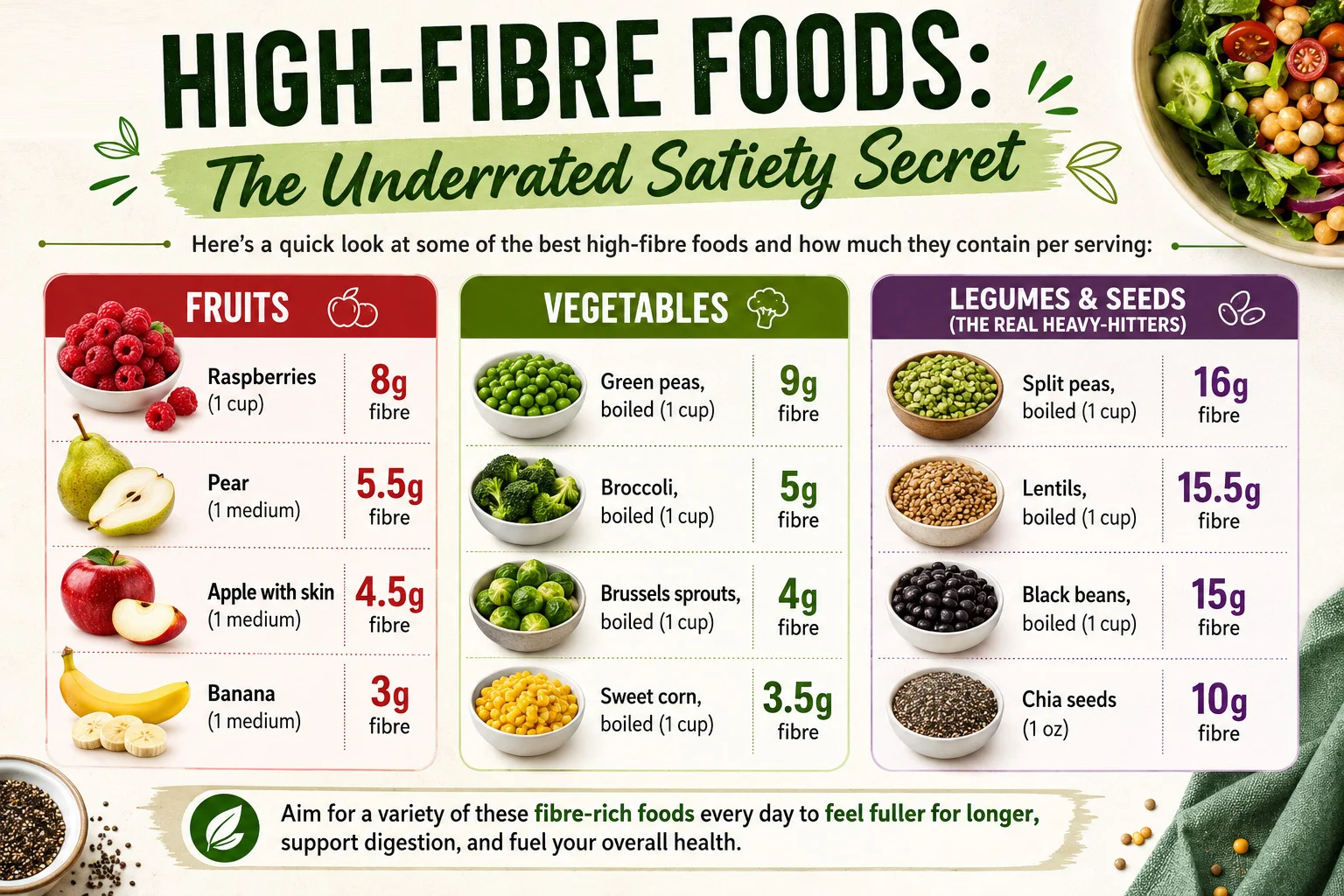
Fibre adds bulk to meals without adding calories, slows digestion, and feeds beneficial gut bacteria. People who eat more fibre consistently report lower levels of hunger throughout the day. Most adults in the UK eat around 18g of fibre per day — the recommended target is 30g.
Here's a quick look at some of the best high-fibre foods and how much they contain per serving:
Fruits
- Raspberries (1 cup): 8g fibre
- Pear (1 medium): 5.5g fibre
- Apple with skin (1 medium): 4.5g fibre
- Banana (1 medium): 3g fibre
Vegetables
- Green peas, boiled (1 cup): 9g fibre
- Broccoli, boiled (1 cup): 5g fibre
- Brussels sprouts, boiled (1 cup): 4g fibre
- Sweet corn, boiled (1 cup): 3.5g fibre
Legumes & Seeds (The Real Heavy-Hitters)
- Split peas, boiled (1 cup): 16g fibre
- Lentils, boiled (1 cup): 15.5g fibre
- Black beans, boiled (1 cup): 15g fibre
- Chia seeds (1 oz): 10g fibre
Legumes in particular are incredibly useful for appetite control and sustainable weight management — they're high in both fibre and protein, making them doubly effective at keeping hunger at bay.
Related Blog : High-Protein Vegan Foods for Sustainable Weight Loss in the UK
Healthy Fats: Slow Digestion, Sustained Energy
Fat has more than twice the calories per gram compared to carbs and protein — 9 calories vs 4 — so portion control matters. But the right fats, eaten in the right amounts, actually help you feel satisfied after meals and stay fuller longer.
Unsaturated fats are the ones to prioritise. Unlike saturated fats (found primarily in animal products like butter, cheese, and fatty meat), unsaturated fats provide essential omega-3 and omega-6 fatty acids and antioxidants like Vitamin E.
Good sources of unsaturated fats include:
- Nuts and seeds (almonds, walnuts, sunflower seeds)
- Olive oil, walnut oil, and avocado oil
- Avocados
- Oily fish: salmon, mackerel, and trout (aim for at least one portion per week)
Adding a small amount of healthy fat to meals — a handful of almonds, half an avocado, a drizzle of olive oil — can meaningfully extend the feeling of fullness without dramatically increasing calorie intake.
Practical Tips for Building Meals That Keep You Full
Knowing which foods support satiety is one thing. Putting that into practice daily is another. A few habits that make the biggest difference:
- Build every meal around a lean protein source — this is the single most effective change for reducing cravings throughout the day.
- Choose whole grains over refined ones every time you can. Brown rice instead of white. Wholemeal bread instead of white. Wholewheat pasta instead of regular.
- Add vegetables to bulk out meals. They add volume, fibre, and nutrients for very few calories.
- Don't fear fat — include a small amount of healthy fat (olive oil, avocado, nuts) to slow digestion and extend satiety.
- Eat fruit rather than drink it. Whole fruit contains fibre; fruit juice is essentially sugar water.
- Stay hydrated. Thirst is often mistaken for hunger. Drinking water before and during meals can reduce overall food intake.
For those working with a medically supervised weight management programme, these food choices can complement clinical interventions and make the process significantly more manageable.
The Bottom Line
Controlling hunger doesn't require extreme restriction or endless willpower. It mostly comes down to choosing foods that work with your body's natural appetite signals rather than against them. Lean proteins, low-GI carbohydrates, high-fibre foods, and unsaturated fats each play a distinct role in keeping you satisfied between meals and reducing the cravings that derail healthy eating habits.
Small, consistent changes compound over time. Start with one meal and make it protein-rich with a low-GI carb base. See how different you feel three hours later compared to a high-GI, low-protein alternative. Most people notice the difference quickly.
If you're looking for additional support on your weight management journey, Weight Medics offers professional guidance tailored to your individual needs and health goals.
— Content informed by NHS Eat Well Guidelines and clinical nutritional guidance.
What foods keep you full the longest?
Foods high in protein and fibre generally keep you full longest. Lentils, eggs, oats, chicken, and Greek yoghurt are among the most satiating options. Combining protein with a low-GI carbohydrate and some healthy fat in a single meal tends to produce the longest-lasting fullness.
What foods reduce food cravings?
Foods that stabilise blood sugar are most effective at reducing cravings. Low-GI carbohydrates like oats, brown rice, and wholegrains prevent the blood sugar crashes that trigger cravings. Lean protein also plays a significant role by regulating appetite hormones.
Is fibre or protein better for satiety?
Both work well, and they work even better together. Protein is the most satiating macronutrient on a calorie-for-calorie basis, but fibre adds physical bulk to food and slows digestion, extending the feeling of fullness. Meals combining both — such as lentil soup or a chicken and vegetable stir-fry with brown rice — tend to be most effective.
Can healthy fats help with cravings?
Yes. Unsaturated fats slow the rate at which your stomach empties, meaning food stays with you longer. A small portion of nuts, half an avocado, or a piece of oily fish can meaningfully extend satiety after a meal without causing the blood sugar swings that drive cravings.
How does low GI eating help with weight loss?
Low glycaemic index foods release glucose slowly into the bloodstream, preventing the sharp spikes and crashes that cause cravings and overeating. People following a low-GI diet tend to feel more in control of their hunger and find it easier to maintain a calorie deficit over time, which is the fundamental requirement for sustainable weight loss.
How much fibre should I eat per day?
The recommended intake for adults is 30g per day. Most people fall significantly short of this. Gradually increasing fibre intake — by swapping refined grains for wholegrains, adding pulses to meals, and eating more vegetables and fruit — is more comfortable for digestion than a sudden large increase.
- Why Some Foods Fill You Up and Others Leave You Hungry
- Lean Proteins: Your Best Ally Against Cravings
- Low-GI Carbohydrates: Keep Blood Sugar Stable, Keep Cravings Away
- High-Fibre Foods: The Underrated Satiety Secret
- Healthy Fats: Slow Digestion, Sustained Energy
- Practical Tips for Building Meals That Keep You Full
- The Bottom Line